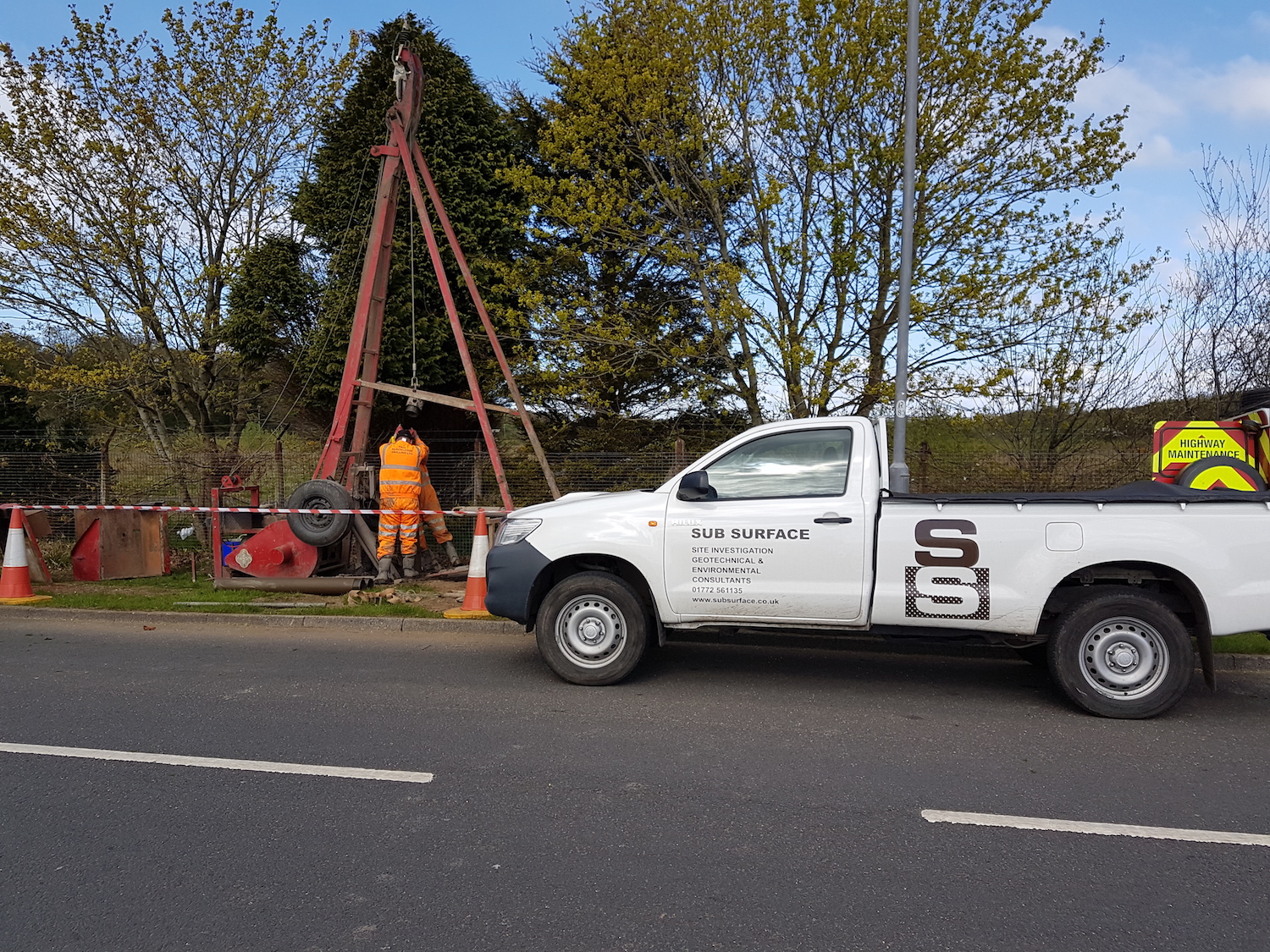
A Ground Investigation is an intrusive investigation to assess the soil, rock, and groundwater conditions. It provides essential geotechnical and environmental information to support foundation design, identify hazards and satisfy regulatory requirements.
Sub Surface can design a site-specific Ground Investigation that meets the needs of the Client, the project relevant regulatory bodies. We cater for projects of all scales, from small residential extensions to major corporate and government infrastructure schemes. With our network of local offices across the UK, we provide a professional, reliable and cost-effective service nationwide.
All our Ground Investigations are carried out in accordance with the UK Specification for Ground Investigation, British Standard Code of Practice BS5930 and British and European Standard BS EN 1997-2 (EC7). For Quality Assurance, all our equipment is calibrated, drillers have an NVQ Level 2 in Land Drilling from the British Drilling Association and staff are highly trained. We are also accredited by CHAS meaning our health and safety processes meet excellent standards.
Founded in 1972 and boasting over 50 years of experience, Sub Surface has earned recognition as one of the UK’s leading independent firms specialising in Ground Investigation, Geotechnical, and Environmental Consultancy.


The Ground Investigation Process
Every project is different, so we tailor each ground investigation to meet the needs of the Client, design team and regulatory authorities. A typical combined geotechnical and environmental investigation includes the following stages
1. Phase 1 Desk Study and Walkover Survey
Most projects start with a Phase 1 Desk Study and a walkover survey to:
-
- Review of historical, geological and environmental records.
- Identify potential ground risks such as contamination, mining or natural hazards.
- Determine whether supplementary reports are necessary, such as a Coal Mining Risk Assessment, Natural Cavities and Mining Appraisal.
- Allow for a more targeted and cost-effective intrusive ground investigation
2. Ground Investigation Design
Our experienced Contracts Managers will:
-
- Design a site-specific ground investigation tailored to your site and project requirements.
- Select the most appropriate investigation methods with the information available.
- Plan the location and depth of the boreholes, trial pits and other sampling and monitoring points.
- Produce a preliminary laboratory testing schedule based on the anticipated ground conditions and project requirements.
3. Intrusive Ground Investigation & Sampling
Depending on the project and requirements, we may use:
-
- Boreholes: Rotary, cable percussive or window sampling techniques used to obtain soil and rock samples and carry out SPT’s, CPT’s, hand shear vane tests.
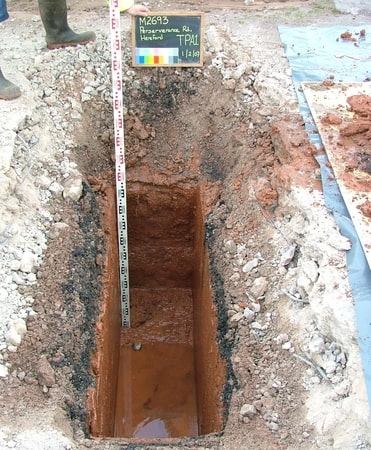
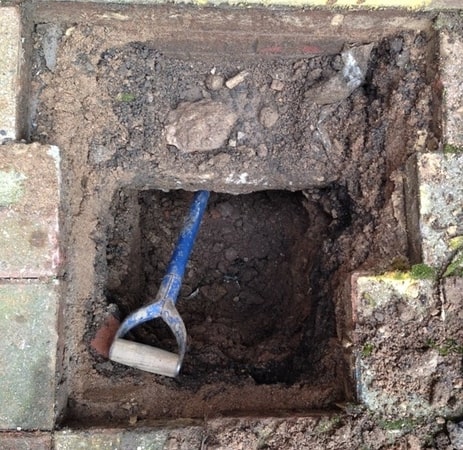
- Trial Pits: Machine-dug or hand dug to obtain soil samples and provide a greater visual assessment of the ground.
- In situ Testing: BRE 365 Soakaway Tests, Percolation Tests, CBR Tests, Plate Bearing Tests.
- Monitoring: Installation and monitoring of groundwater and gas monitoring standpipes.
4. Laboratory Testing
After field works is complete:
-
- Geotechnical Testing is carried out at our in-house laboratory.
- Chemical Contamination Testing is carried out at a specialist ISO 17025 and MCERTS accredited chemical laboratory.
5. Data Interpretation & Reporting
We offer several report types depending on project needs:
-
- Factual Report: Presents data only, with no interpretation.
- Interpretative Report (most common): Provide engineering analysis, recommendations and risk assessments.
- Ground Investigation Report (GIR): A detailed Factual Report including site description, history, walkover survey, field results, lab results, ground parameters and derived values. Typically for very large or complex infrastructure projects where specialist Geotechnical Design Engineers are involved.
Need a fast turnaround? We can overlap the Desk Study and Intrusive phases to reduce programme length and accelerate design progression.
Ground Investigation Techniques
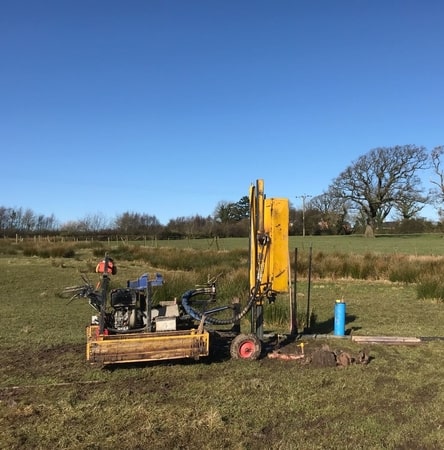
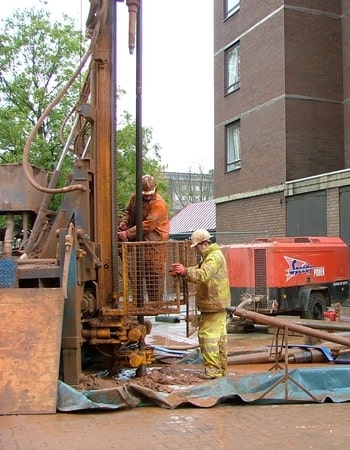
There are various methods of intrusive Ground Investigation techniques of which each technique has its advantages and limitations. The technique used will be determined by the Clients’ requirements, proposed development, site location, anticipated geology, any Local Authority Requirements and when available, the findings of a Desktop Study. Some of the most common methods Sub Surface use include:


Further details of the various techniques, testing and reporting services are given under Site Investigation
What’s Included in Our Interpretative Ground Investigation Reports
Every project and development is unique, however a typical interpretative Ground Investigation Report for a basic Foundation Assessment, would include:
-
- Site description
- Engineer Logs
- In-situ Testing
- Laboratory Testing
- Shrinkage and swelling potential of clays/silts (cohesive strata)
- A Foundation Assessment
- Bearing Pressures and/or Pile Loads
- Floor Slab Construction
- Groundwater Information
- Concrete Classification – Design Sulphate (DS) Class and Aggressive Chemical Environment for Concrete (ACEC) Classification
Additional items commonly incorporated within our Interpretative Reports include:
-
- A Coal Mining Risk Assessment
- Earth Pressure Coefficients for Retaining Walls and Basements
- CBR Values for Roads, Car Parks and Hardstandings
- Percolation and Soakaway Tests
- Settlement Calculations
- Slope Stability Analysis
- Contamination Analysis
- Waste Classification
- Landfill Gas Assessment
It should be noted that for brownfield sites, and many greenfield sites, the Local Authority will generally include a planning condition requiring a Phase 1 Desktop Study
All of our Interpretive Reports are written to the current British Standards, Eurocode 7 Standards and National House Building Council (NHBC) Standards.
How much does a Ground Investigation Cost?
The cost of a Ground Investigation can vary significantly depending on factors such as:
-
- Scope of work
- Proposed development
- Size and location of the site
- Soil and geology in the area
- Depth of investigation
- Reporting and regulatory requirements
- And many more.
Benefits of Choosing Sub Surface
Founded in 1972 and with over 50 years of experience, Sub Surface is recognised as one of the UK’s leading independent firms specialising in Geotechnical and Environmental Ground Investigations Services.
At Sub Surface, we believe in ‘Building Better Through Continuous Improvement.’ By delivering high quality geotechnical and environmental ground investigation solutions, we empower our clients with the information they need to develop safer, stronger and more sustainable developments.
We provide a local service through our network of local offices based in Preston (North West), Ossett (North East), Tipton (Midlands) and High Wycombe (South East). This ensures our clients receive a personal and high-quality ground investigation service at a cost-effective price.
Our highly experienced and professionally qualified staff include Chartered Civil Engineers, Chartered Geologists, Chartered Environmentalists and a Qualified person under CL:AIRE DoW:CoP. Sub Surface and our employees are also members of professional institutions and industry bodies including the Institution of Civil Engineers (ICE), Institution of Environmental Sciences (IES), The Geological Society, Association of Geotechnical & Geoenvironmental Specialists (AGS) and British Drilling Association (BDA).
Request a Quote
If you would like a quote, please contact your Regional Sub Surface Office and email the following information (where necessary/available):
-
- Project requirements
- Site Location Plan
- Existing Site Plan
- Proposed Development Plan
- Phase 1 Desk Study
- Planning Conditions

For more information about Ground Investigations, read our blog post… What is a Site Investigation Q & A’s